Precedents worth looking at closely
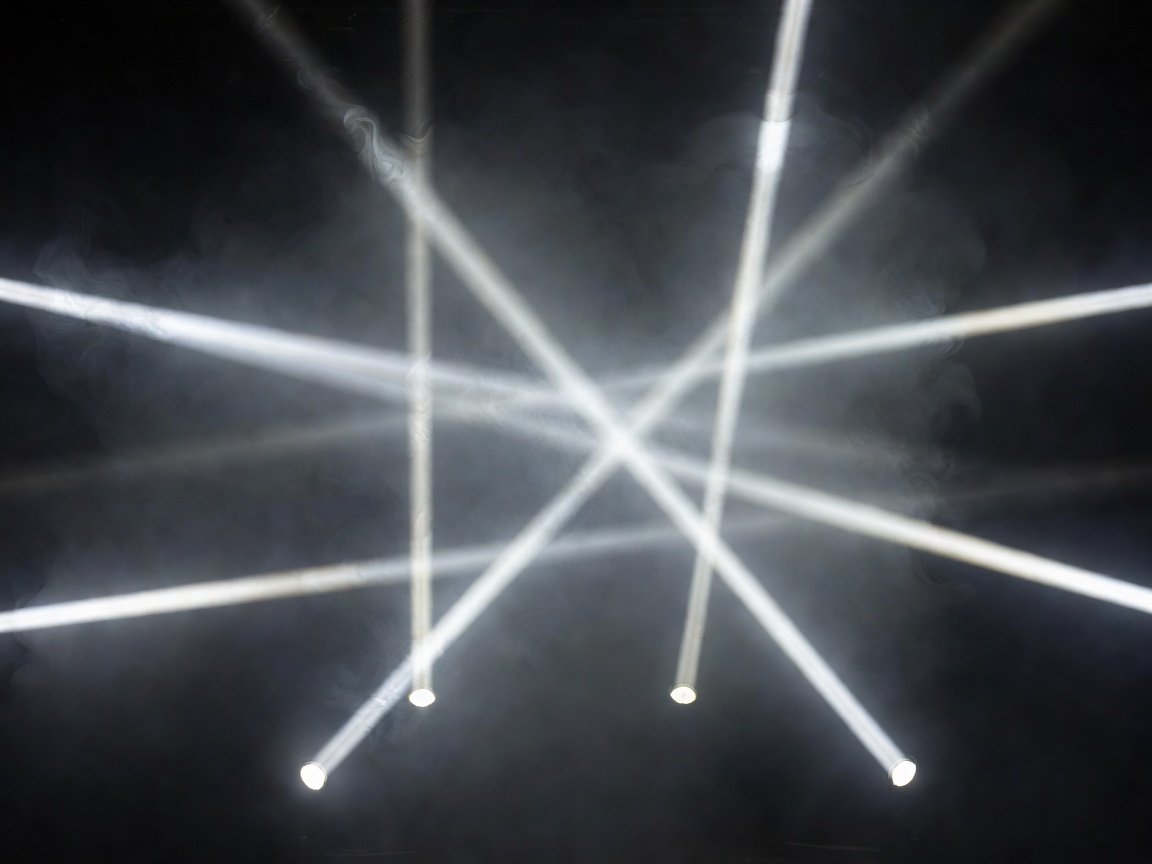
Anthony McCall’s Line Describing a Cone, first presented in 1973, is a useful reference for thinking about projected light as an apparent volume. Its slowly developing form asks viewers to notice their position within a beam, rather than merely look at an image on a wall. It belongs to a different artistic context from an arena lighting show, but the perceptual question is closely related: when does illumination begin to read as space?
Rafael Lozano-Hemmer’s Vectorial Elevation, first realized in Mexico City’s Zócalo around the turn of the millennium, offers another perspective. Searchlight arrangements became an urban-scale, participatory composition. Ryoji Ikeda’s spectra projects likewise demonstrate how concentrated fields of light can reorganize the perception of a site. These works should not be reduced to a fixture count. Their setting, duration, public encounter and authorship matter as much as their luminous geometry.
A moving light is not a laser
Both technologies can produce sharply directed effects, but their optical characteristics and risk profiles differ. A theatrical moving light is not simply a less powerful laser, and a laser is not a universal replacement for a narrow-beam fixture. Audience exposure, scanning behavior, access restrictions and applicable regulations require specialist assessment. Photographs cannot establish that an effect is safe, nor can the apparent softness of an image.
Atmospheric effects also have consequences beyond appearance. Venue rules, ventilation, respiratory sensitivities, fire detection and local requirements all belong in professional planning. For a visitor, useful questions include whether haze or flashing effects are disclosed, whether an alternative viewing area exists and how to leave without crossing a performance zone. An evocative composition does not remove the need for those practical considerations.
How to read a beam sequence
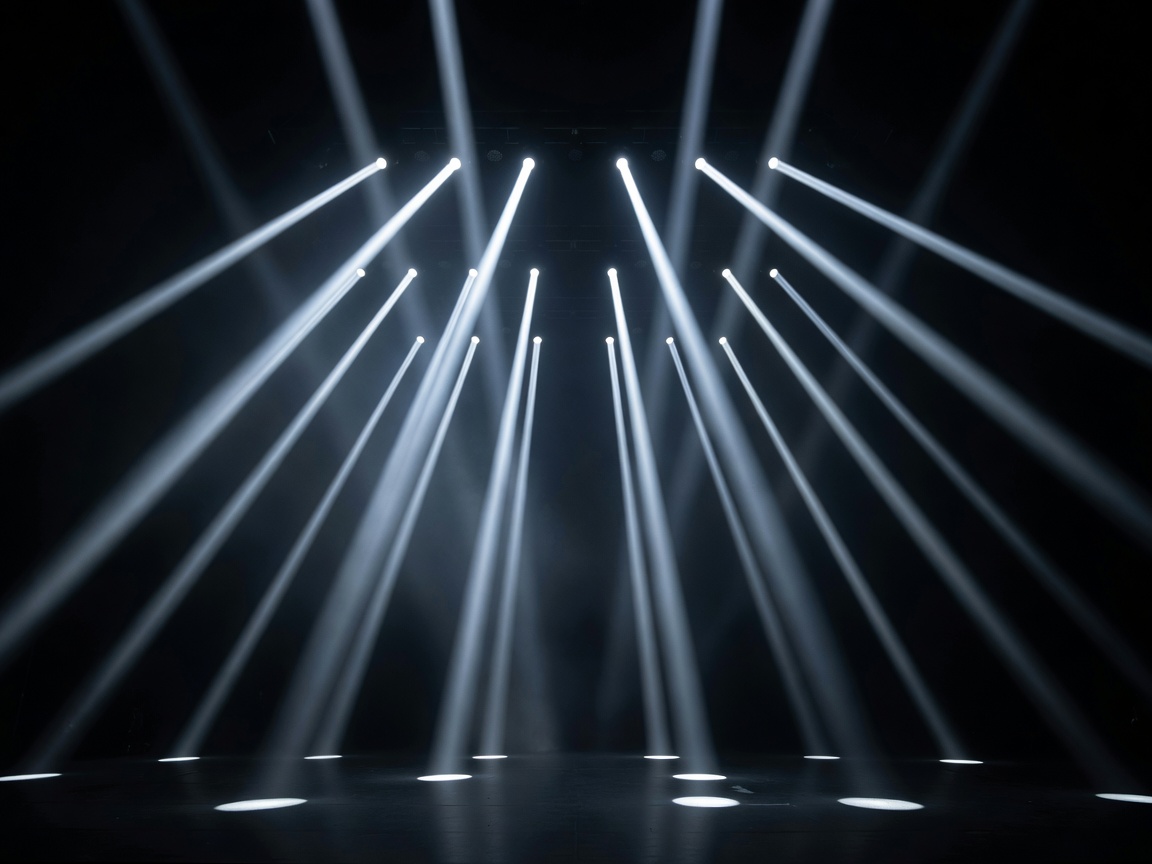
Watch one lighting position through an entire phrase before trying to take in the whole field. Notice whether the source moves, the beam changes width, the intensity changes, or several of these events overlap. Then shift attention to the group: does a gesture travel across the room, arrive everywhere at once or resolve in a deliberately uneven pattern? A delayed entrance can create the impression of motion even when each fixture repeats a simple action.
Finally, attend to darkness. Black intervals establish boundaries, hide transitions and allow a modest change to register. Continuous maximum output can flatten a composition by removing contrast and exhausting attention. The most articulate sequence may be the one that briefly leaves a path empty, allowing the audience to anticipate what will occupy it next.
Reference points
- Anthony McCall — artist information and work documentation.
- Rafael Lozano-Hemmer — project documentation, including Vectorial Elevation.
- Ryoji Ikeda — official project archive.
- International Laser Display Association — introductory laser safety context, not a substitute for applicable law.